
Medical Disclaimer
This article is intended for general educational purposes only and should not be considered a substitute for professional medical advice, diagnosis or treatment. If you have symptoms of thyroid disease or concerns about your thyroid medication, consult a qualified healthcare professional.
Feeling tired all the time, gaining weight without making major changes to your diet, experiencing unusual hair fall, or noticing changes in your periods? These symptoms can have many possible causes, but sometimes they may be connected to an underactive thyroid.
Hypothyroidism is a common thyroid condition in which the thyroid gland does not produce enough thyroid hormones. Since thyroid hormones influence several important functions in the body, an underactive thyroid can affect everything from energy levels and metabolism to menstrual cycles and overall well-being.
The good news is that hypothyroidism can usually be managed with proper medical care. Understanding the symptoms and getting the right diagnosis can help women take better care of their health.
Contents
ToggleWhat Is Hypothyroidism?
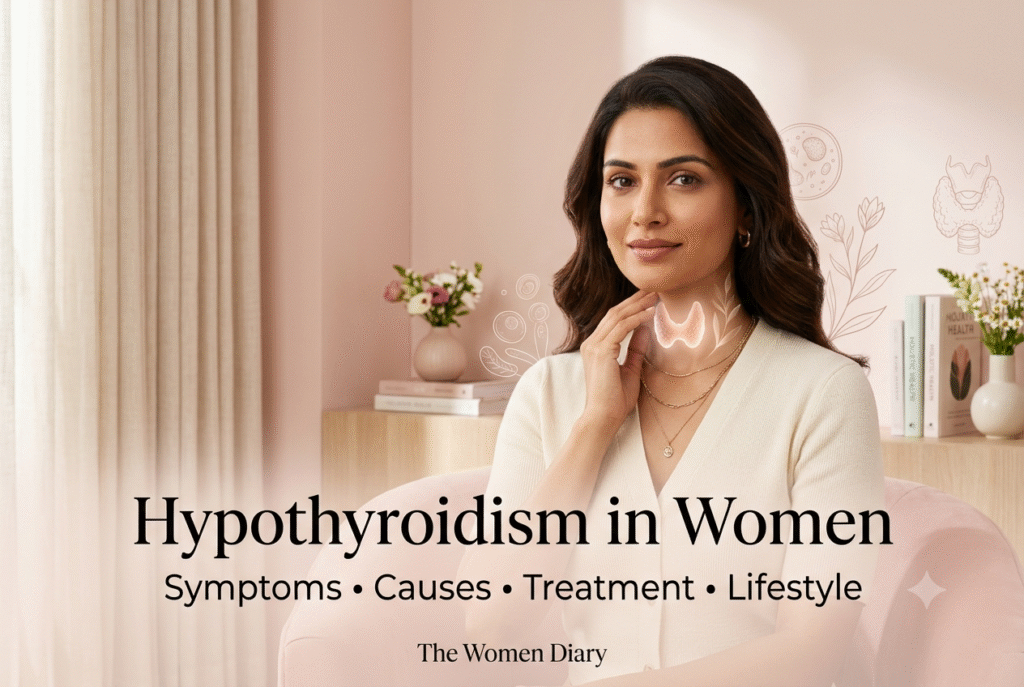
The thyroid is a small, butterfly-shaped gland located at the front of your neck. Although it is small, it plays an important role in regulating many functions of the body.
It produces thyroid hormones that influence metabolism, energy use, body temperature, heart rate and several other processes.
Hypothyroidism occurs when the thyroid gland does not produce enough thyroid hormones.
When thyroid hormone levels are too low, many body processes can slow down. This is why a woman with hypothyroidism may notice several seemingly unrelated symptoms at the same time.
Hypothyroidism is different from hyperthyroidism, where the thyroid produces too much thyroid hormone.
Why Is Hypothyroidism More Common in Women?
Thyroid disorders can affect anyone, but women are more likely to develop thyroid problems than men.
One important reason is that some thyroid conditions are related to autoimmune disorders. For example, Hashimoto’s thyroiditis occurs when the immune system mistakenly attacks the thyroid gland and can eventually lead to hypothyroidism.
Hormonal changes associated with pregnancy and the postpartum period can also affect thyroid function.
Having a family history of thyroid disease or certain autoimmune conditions may also increase the likelihood of developing thyroid problems.
Symptoms of Hypothyroidism in Women
Hypothyroidism does not look exactly the same in every woman. Some people have several symptoms, while others may notice only one or two.
Common symptoms can include:
Persistent tiredness or low energy
Unexplained weight gain
Difficulty losing weight
Feeling unusually cold
Dry skin
Hair thinning or increased hair fall
Constipation
Muscle aches or weakness
Puffy face
Changes in mood
Difficulty concentrating or “brain fog”
Slower heart rate
Changes in menstrual periods
Sleep-related problems
These symptoms are not exclusive to thyroid disease. For example, tiredness and hair fall can also be associated with nutritional deficiencies, stress, hormonal changes and other health conditions.
That is why symptoms alone cannot confirm that you have hypothyroidism.
Can Hypothyroidism Affect Your Periods?
Yes, thyroid function can affect the menstrual cycle.
Some women with hypothyroidism may experience heavier or more frequent periods, while others may notice irregular or less frequent periods.
Thyroid hormones interact with the reproductive system, so an imbalance can sometimes affect ovulation and menstrual function.
If your periods have suddenly become irregular, unusually heavy or significantly different from your normal pattern, it is worth discussing the change with your healthcare provider rather than assuming it is simply a hormonal fluctuation.
Can Hypothyroidism Affect Fertility?
Thyroid health can also be relevant for women who are trying to conceive.
Untreated or inadequately controlled hypothyroidism may interfere with normal reproductive function in some women. This is one reason thyroid function is often considered when a woman has menstrual irregularities or difficulties with conception.
If you are planning a pregnancy and already have hypothyroidism, speak with your doctor about your thyroid levels and medication. Thyroid hormone requirements can change during pregnancy, so monitoring is particularly important during this time.
What Causes Hypothyroidism?
There isn’t one single cause of hypothyroidism.
Some common causes include:
Hashimoto’s thyroiditis
Hashimoto’s is an autoimmune condition in which the immune system attacks the thyroid. Over time, this can reduce the thyroid’s ability to produce hormones.
Iodine deficiency
Iodine is needed to make thyroid hormones. However, iodine deficiency is not the cause of every case of hypothyroidism, and taking extra iodine without medical advice is not recommended.
Thyroid surgery
Women who have had part or all of their thyroid removed may develop hypothyroidism and require thyroid hormone replacement.
Certain treatments
Some medications and treatments can affect thyroid function.
Problems involving the pituitary gland
Less commonly, hypothyroidism can result from problems involving the pituitary gland, which helps regulate thyroid hormone production.
Pregnancy and postpartum thyroid changes
Thyroid function can change during and after pregnancy. Some women may develop thyroid problems during the postpartum period.
Who Is More Likely to Develop Hypothyroidism?
Your risk may be higher if you:
Have a family history of thyroid disease
Have an autoimmune condition
Have previously had thyroid problems
Have undergone thyroid surgery or certain treatments
Have recently been pregnant
Take certain medications that affect thyroid function
Having a risk factor does not mean that you will definitely develop hypothyroidism.
How Is Hypothyroidism Diagnosed?
Hypothyroidism cannot be diagnosed reliably based only on symptoms.
Doctors generally use blood tests to assess thyroid function. A commonly used test is TSH (thyroid-stimulating hormone). A free T4 test may also be used to understand how much thyroid hormone is available in the blood.
In some situations, a doctor may recommend thyroid antibody testing, particularly when an autoimmune thyroid condition such as Hashimoto’s is suspected.
Your doctor will interpret the results together with your symptoms, medical history and other relevant factors.
How Is Hypothyroidism Treated?
The standard treatment for many people with hypothyroidism is thyroid hormone replacement, commonly levothyroxine.
It is designed to replace the hormone that the body is not producing in sufficient amounts.
The required dose is not necessarily the same for everyone. Your doctor may adjust the dose depending on your blood test results, symptoms, age, pregnancy status and other factors.
Once treatment begins, follow-up blood tests may be needed to determine whether the dose is appropriate.
How Should You Take Thyroid Medicine?
The exact instructions can vary, so always follow your doctor’s advice and the instructions provided with your medication.
Thyroid medication is generally taken consistently at the same time each day. Food and certain supplements or medicines can affect its absorption.
For example, iron and calcium supplements can interfere with levothyroxine absorption when taken too close to the thyroid medicine.
If you take supplements such as iron, calcium or other medications, ask your doctor or pharmacist how to space them from your thyroid medicine.
Do not change your dose or stop your medication simply because you start feeling better.
Can Hypothyroidism Cause Weight Gain?
Weight gain is one of the symptoms people commonly associate with hypothyroidism.
An underactive thyroid can slow certain body processes and may contribute to weight gain. However, not every case of weight gain is caused by the thyroid.
Body weight is influenced by many factors, including food intake, physical activity, sleep, medications, hormones, genetics and other health conditions.
Once thyroid hormone levels are appropriately treated, some thyroid-related weight changes may improve. However, thyroid medication should not be viewed as a weight-loss treatment.
If you have hypothyroidism and are trying to lose weight, a combination of appropriate medical treatment, balanced nutrition and regular physical activity can be more useful than following an extreme diet.
What Should You Eat If You Have Hypothyroidism?
There is no single food that can cure hypothyroidism.
Instead of following a restrictive “thyroid diet,” focus on a varied and balanced eating pattern that provides the nutrients your body needs.
Your meals can include:
Vegetables and fruits
Protein-rich foods such as eggs, fish, chicken, pulses and other suitable sources
Whole grains
Healthy fats
Dairy or suitable alternatives
Iron-rich foods
Foods containing selenium and zinc
Appropriate sources of iodine
Do You Need to Avoid Broccoli, Cabbage or Soy?
This is a common concern among people with thyroid problems.
For most people, there is no need to completely eliminate vegetables such as broccoli, cauliflower or cabbage simply because they have hypothyroidism. These foods can be part of a balanced diet.
Soy also does not automatically need to be eliminated. However, if you take thyroid medication, discuss the timing of soy-containing foods and supplements with your healthcare provider, particularly if your thyroid levels are difficult to control.
The bigger concern is often unnecessary restriction or excessive supplementation. Taking high-dose iodine or other “thyroid support” supplements without medical advice can be harmful.
Hypothyroidism and Hair Fall
Hair fall can be particularly frustrating for women with thyroid problems.
Low thyroid hormone levels can contribute to changes in the hair growth cycle, potentially causing increased shedding or thinning.
However, thyroid disease is not the only possible cause of hair loss. Iron deficiency, stress, hormonal changes, nutritional deficiencies and scalp conditions can also play a role.
If your hair fall continues even after your thyroid levels are under control, talk to your doctor or dermatologist rather than assuming that your thyroid is the only reason.
Lifestyle Habits That Can Support Your Health
Medication is important when it has been prescribed, but your everyday habits matter too.
Stay physically active
Walking, strength training, cycling, swimming or another activity you enjoy can help support overall fitness and metabolic health.
You don’t need to start with intense workouts. Consistency is more important than trying to do too much at once.
Prioritize sleep
Poor sleep can leave you feeling exhausted and may make it harder to maintain healthy eating and activity habits.
Aim for a consistent sleep schedule and give your body enough time to rest.
Eat balanced meals
Instead of skipping meals or following extreme diets, focus on balanced meals containing protein, vegetables or fruit, whole grains and healthy fats.
Take your medication consistently
If thyroid medication has been prescribed, taking it consistently and following the prescribed instructions is an important part of managing hypothyroidism.
Keep up with follow-up testing
Your thyroid hormone requirements can change over time. Regular testing allows your healthcare provider to determine whether your current treatment remains appropriate.
Hypothyroidism During Pregnancy
Thyroid hormones are important during pregnancy because they support both maternal health and fetal development.
Women with known hypothyroidism who are pregnant or planning to become pregnant should speak with their healthcare provider about thyroid monitoring.
Thyroid medication requirements can change during pregnancy, so your doctor may recommend more frequent blood tests and adjustments to treatment.
If you are planning a pregnancy, it is better to discuss your thyroid condition before conception rather than waiting until pregnancy has already occurred.
Common Myths About Hypothyroidism
Myth 1: Hypothyroidism always causes major weight gain.
Fact: Weight gain can occur, but the amount varies considerably between individuals. Many other factors can influence body weight.
Myth 2: A special diet can cure hypothyroidism.
Fact: A nutritious diet can support overall health, but common forms of hypothyroidism generally require appropriate medical treatment.
Myth 3: Everyone with hypothyroidism must avoid cabbage and broccoli.
Fact: Most people do not need to completely eliminate these nutritious vegetables.
Myth 4: You can stop thyroid medicine when your symptoms improve.
Fact: Feeling better does not necessarily mean that treatment is no longer needed. Medication changes should be made with medical guidance.
Myth 5: Thyroid problems affect only older women.
Fact: Hypothyroidism can occur in women of different ages, including younger women.
When Should You See a Doctor?
Consider speaking with a healthcare professional if you have persistent symptoms such as unexplained weight changes, ongoing fatigue, significant hair loss, constipation, unusual sensitivity to cold or changes in your menstrual cycle.
You should also discuss thyroid testing with your doctor if you have risk factors for thyroid disease or are planning pregnancy.
Most importantly, don’t try to diagnose yourself based on a checklist of symptoms. Many thyroid symptoms overlap with other health conditions, so proper testing is important.
Frequently Asked Questions About Hypothyroidism in Women
Can hypothyroidism cause weight gain?
Yes. Hypothyroidism can contribute to weight gain in some people, but weight is affected by many different factors. Treating the thyroid problem does not automatically lead to significant weight loss.
Can hypothyroidism cause hair fall?
Yes, hypothyroidism can contribute to hair thinning or increased hair shedding. However, hair loss has many possible causes, including nutritional deficiencies, stress and hormonal changes.
Can women with hypothyroidism get pregnant?
Yes. Many women with hypothyroidism can become pregnant. However, thyroid function should be appropriately monitored, particularly before and during pregnancy.
Does hypothyroidism affect periods?
It can. Some women may experience heavier, irregular or otherwise changed menstrual cycles.
Is there a special diet for hypothyroidism?
There is no universal diet that cures hypothyroidism. A balanced diet containing adequate nutrients is generally more useful than unnecessary food restrictions.
Can exercise help with hypothyroidism?
Regular physical activity can support overall health, fitness and weight management. However, exercise does not replace thyroid hormone treatment when medication is required.
Can hypothyroidism be cured?
Whether hypothyroidism can be reversed depends on its cause. Some forms are temporary, while many common forms, including Hashimoto’s-related hypothyroidism, require long-term management.
How long does thyroid medicine take to work?
People may notice improvement at different rates, and thyroid hormone levels take time to stabilize. Your doctor may repeat blood tests after starting or changing medication to assess the response.
Can I stop taking thyroid medicine when my TSH becomes normal?
Do not stop thyroid medication on your own. A normal TSH while taking medication generally indicates that the treatment is helping maintain thyroid hormone levels. Any change should be discussed with your healthcare provider.
Closing Thoughts
Living with hypothyroidism does not mean that you have to put your health or everyday life on hold.
The most important steps are getting an accurate diagnosis, taking prescribed treatment correctly, attending follow-up appointments and building healthy habits that you can maintain over time.
If you’re experiencing several symptoms of an underactive thyroid, don’t simply blame tiredness, stress or weight gain on a busy lifestyle. Talking to a healthcare professional and getting the appropriate tests can help you understand what’s really happening with your body.
Your thyroid may be small, but taking care of it can be an important part of taking care of your overall health.
Medical References
The medical information in this article has been compiled from established medical and public-health sources, including:
National Institute of Diabetes and Digestive and Kidney Diseases (NIDDK). Hypothyroidism. https://www.niddk.nih.gov/health-information/endocrine-diseases/hypothyroidism
American Thyroid Association. Hypothyroidism. https://www.thyroid.org/hypothyroidism/
NHS. Underactive thyroid (hypothyroidism). https://www.nhs.uk/conditions/underactive-thyroid-hypothyroidism/
National Institute of Diabetes and Digestive and Kidney Diseases (NIDDK). Hashimoto’s Disease. https://www.niddk.nih.gov/health-information/endocrine-diseases/hashimotos-disease
American Thyroid Association. Thyroid Disease in Pregnancy. https://www.thyroid.org/thyroid-disease-pregnancy/
MedlinePlus. Hypothyroidism. https://medlineplus.gov/hypothyroidism.html