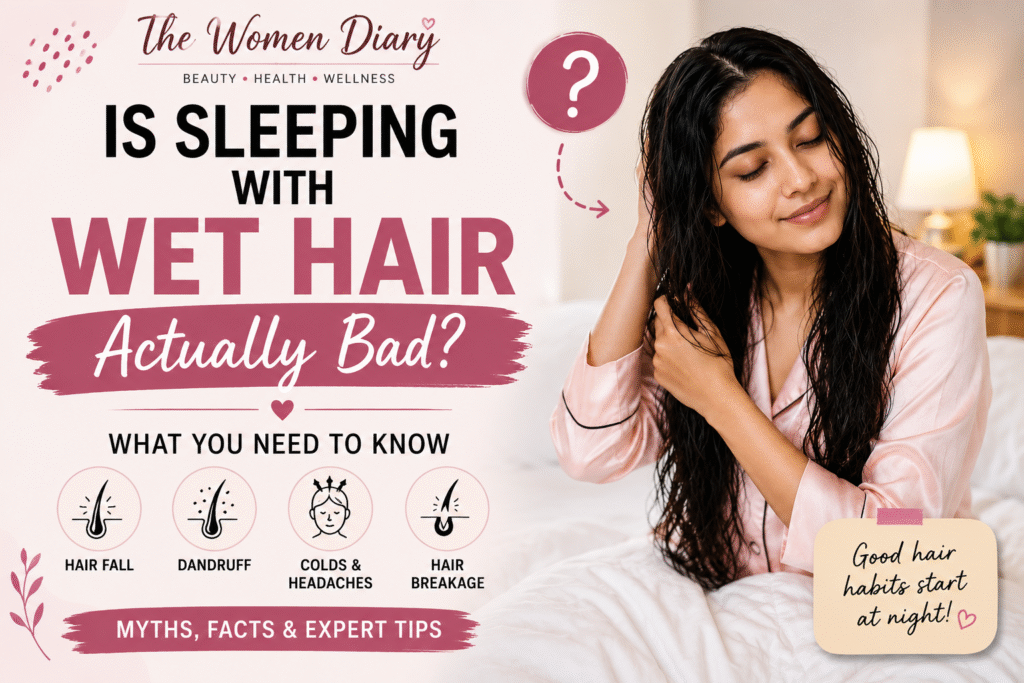
You’ve probably heard it countless times: “Never sleep with wet hair.” Some people say it can cause a cold, others blame it for hair fall, dandruff, or even headaches.
But how much of this is actually true?
The reality is a little more nuanced. Sleeping with wet hair once in a while is unlikely to cause serious problems, but regularly going to bed with soaking-wet hair isn’t the best habit for your hair or scalp. Wet hair is more fragile and can be more vulnerable to friction, tangling and breakage while you sleep.
So, before you reach for the hair dryer every night, let’s separate the myths from the facts and look at what you should actually do.
Contents
ToggleIs Sleeping With Wet Hair Actually Bad?
It can be, especially if it becomes a regular habit.
When hair is wet, it is more vulnerable to physical damage than when it is dry. Tossing and turning on your pillow can create friction, which may contribute to tangling, frizz and breakage.
However, sleeping with wet hair doesn’t automatically mean you’ll wake up with hair loss, dandruff or a cold.
The bigger concern is repeated physical damage to the hair, particularly if your hair is already dry, chemically treated, curly or prone to breakage.
Why Is Wet Hair More Fragile?
Your hair doesn’t become permanently weak when it gets wet, but water changes the way the hair behaves.
Wet hair can stretch more easily and is generally more vulnerable to manipulation. Brushing, tying it tightly, rubbing it with a towel or moving around against a pillow can therefore cause more stress.
Sleeping with wet hair can mean several hours of friction against your pillow.
Over time, this may contribute to:
- Hair breakage
- Tangling
- Frizz
- Split ends
- Rough-looking hair
This is particularly relevant if you frequently wash your hair at night and go straight to bed without drying it.
Can Sleeping With Wet Hair Cause Hair Fall?
This is one of the biggest myths surrounding the topic.
Sleeping with wet hair does not automatically cause hair loss from the roots.
There is an important difference between hair shedding and hair breakage.
Hair shedding happens when individual hairs naturally fall from the scalp. Hair loss can also have many different causes, including genetics, hormonal changes, nutritional deficiencies, stress and certain medical conditions.
Breakage, on the other hand, happens when the hair shaft becomes damaged and snaps.
Sleeping with wet hair can potentially contribute to breakage because wet strands are more vulnerable to friction and stretching.
So if you notice shorter broken strands, frizz or increased split ends after regularly sleeping with wet hair, your nighttime hair habits could be contributing to the problem.
But significant or persistent hair shedding shouldn’t automatically be blamed on wet hair.
Can Wet Hair Cause Dandruff?
Another common belief is that going to bed with wet hair causes dandruff.
That’s not quite accurate.
Wet hair itself doesn’t directly cause dandruff. Dandruff is associated with several factors, including scalp oil, skin sensitivity and the activity of a naturally occurring yeast called Malassezia.
However, regularly leaving your scalp wet for long periods may create an environment that isn’t comfortable for everyone, particularly if you already experience scalp problems.
If you have persistent dandruff, itching, redness or irritation, simply drying your hair before bed may not solve the underlying problem.
Can Sleeping With Wet Hair Make You Sick?
Can Wet Hair Cause a Cold?
No.
This is probably the most common myth.
Sleeping with wet hair does not cause the common cold. Colds are caused by viruses, not by wet hair.
You may feel cold or uncomfortable if you go to bed with wet hair, especially in an air-conditioned room, but feeling chilly isn’t the same thing as catching a cold.
What About Headaches?
Some people may find sleeping with wet hair uncomfortable and may associate it with headaches or sinus discomfort. However, that doesn’t mean wet hair directly causes headaches.
If you regularly experience headaches, it’s better to consider other possible triggers rather than assuming your wet hair is responsible.
What Happens If You Regularly Sleep With Wet Hair?
If you do it occasionally, you probably don’t need to worry.
But if you regularly go to bed with soaking-wet hair, you may notice:
- More Hair Breakage
Repeated friction and manipulation can make fragile strands more prone to snapping.
- More Tangling
Wet hair rubbing against your pillow can become tangled overnight, making it harder to comb in the morning.
- Increased Frizz
Friction can contribute to a rougher, frizzier appearance.
- Split Ends
Repeated mechanical stress may contribute to damage and split ends over time.
- An Uncomfortable Scalp
Going to bed with a wet scalp can simply feel uncomfortable, particularly if you sleep in an air-conditioned room.
None of these effects are guaranteed to happen, but reducing unnecessary friction and damage is generally better for your hair.
Is It Okay to Sleep With Damp Hair?
There’s an important difference between soaking-wet hair and slightly damp hair.
If your hair is almost completely dry and only slightly damp, there is generally less concern than if you have just stepped out of the shower and immediately gone to bed.
If you wash your hair at night, try to:
- Gently remove excess water.
- Dry your scalp and roots.
- Let your hair air-dry when possible.
- Use a hair dryer if you need to speed up the process.
- Avoid aggressively rubbing your hair with a towel.
- Avoid tight hairstyles while your hair is wet.
The goal isn’t necessarily to make your hair bone-dry every single night. It’s simply to avoid going to bed with soaking-wet hair whenever possible.
How to Dry Your Hair Before Bed
You don’t need an elaborate routine.
Step 1: Remove Excess Water
After washing, gently squeeze excess water from your hair rather than twisting or wringing it.
Step 2: Use a Soft Towel
A microfiber hair towel can help absorb water without the aggressive rubbing that can create unnecessary friction.
Step 3: Let It Air-Dry
If you have enough time, allow your hair to dry naturally before going to bed.
Step 4: Use a Hair Dryer When Needed
If you’re short on time, you can use a hair dryer. Avoid holding very hot air close to one section of your hair for a long period.
Step 5: Detangle Gently
If your hair needs detangling, use a gentle approach and avoid aggressively pulling through knots.
Affiliate opportunity: This section could naturally include links to a microfiber hair towel, hair dryer and wide-tooth comb.
What If You Have to Sleep With Wet Hair?
Sometimes you simply don’t have a choice.
Maybe you washed your hair late at night, you’re travelling, or you’re too tired to wait for it to completely dry.
If that happens, try to minimize potential damage:
- Dry your hair as much as you reasonably can.
- Pay particular attention to the scalp and roots.
- Don’t tie wet hair into a tight ponytail or bun.
- Avoid going to bed with dripping-wet hair.
- Use a clean, smooth pillowcase.
- Don’t aggressively brush or comb your wet hair.
- Give your hair enough space to dry rather than wrapping it tightly.
One night of going to bed with damp hair isn’t something you need to panic about.
Common Myths About Sleeping With Wet Hair
Myth 1: Sleeping With Wet Hair Causes a Cold
Fact: Colds are caused by viruses. Wet hair doesn’t cause a cold.
Myth 2: Wet Hair Causes Hair Loss
Fact: Wet hair doesn’t directly cause hair loss from the scalp. However, wet hair is more vulnerable to physical damage, which can contribute to breakage.
Myth 3: Sleeping With Wet Hair Always Causes Dandruff
Fact: Dandruff has multiple causes and isn’t simply caused by wet hair.
Myth 4: You Should Never Sleep With Damp Hair
Fact: Occasionally sleeping with slightly damp hair is unlikely to cause serious damage. The bigger concern is making it a regular habit, particularly with very wet hair.
Myth 5: Wet Hair Is Stronger
Fact: Wet hair is more vulnerable to stretching and mechanical damage, so rough handling should be avoided.
When Should You Be Concerned About Your Hair or Scalp?
If you’re experiencing persistent hair or scalp problems, don’t assume that sleeping with wet hair is the cause.
Consider speaking with a dermatologist if you notice:
- Persistent or excessive hair shedding
- Noticeable thinning
- Bald patches
- Severe or persistent dandruff
- Intense scalp itching
- Redness or irritation
- Scalp sores or pain
Hair and scalp problems can have many different causes, so finding the underlying reason is more useful than simply changing one nighttime habit.
Final Verdict: Should You Sleep With Wet Hair?
Occasionally sleeping with damp hair is unlikely to cause serious problems.
But if you regularly sleep with soaking-wet hair, it’s worth changing the habit.
The main concern isn’t that you’ll catch a cold. Instead, wet hair is more vulnerable to friction, tangling, stretching and breakage, and leaving your scalp damp for long periods may also be uncomfortable.
So, if you wash your hair at night, give it a little time to dry before getting into bed. You don’t need a complicated routine—just less water, less friction and gentler handling.
Your hair doesn’t need to be perfectly styled before bed. It just needs a little less stress.
Frequently Asked Questions
Is it okay to sleep with wet hair once in a while?
Yes. Occasionally going to bed with damp hair is unlikely to cause serious problems. However, regularly sleeping with soaking-wet hair may increase the risk of hair breakage and tangling.
Does sleeping with wet hair cause hair loss?
Not directly. Sleeping with wet hair may contribute to hair breakage, but true hair loss can have many other causes.
Does wet hair cause dandruff?
Not directly. Dandruff has several causes, including scalp oil, skin sensitivity and Malassezia yeast.
Can sleeping with wet hair make you sick?
No. Wet hair does not cause a common cold. Colds are caused by viruses.
Is it better to air-dry or blow-dry hair before bed?
Both can work. Air-drying is an easy option when you have enough time, while a hair dryer can help when you need to dry your hair quickly. The important thing is to avoid excessive heat and rough handling.
How dry should my hair be before sleeping?
Ideally, avoid going to bed with soaking-wet hair. Getting your scalp and hair mostly dry before bed can help minimize prolonged moisture and friction.
Is sleeping with wet hair bad for curly hair?
Curly hair can be particularly prone to dryness, tangling and breakage, so gentle handling is important. Avoid aggressively brushing or tightly tying wet curls before bed.
The Bottom Line
You don’t have to panic if you’ve fallen asleep with wet hair.
Wet hair won’t give you a cold, and one night isn’t likely to ruin your hair. But if sleeping with soaking-wet hair is part of your regular routine, taking a few extra minutes to dry it can help reduce unnecessary friction, tangling and breakage.
Sometimes, the simplest haircare habits are the ones worth keeping.